

Give us a brief about your band. Who are you and what do you do?
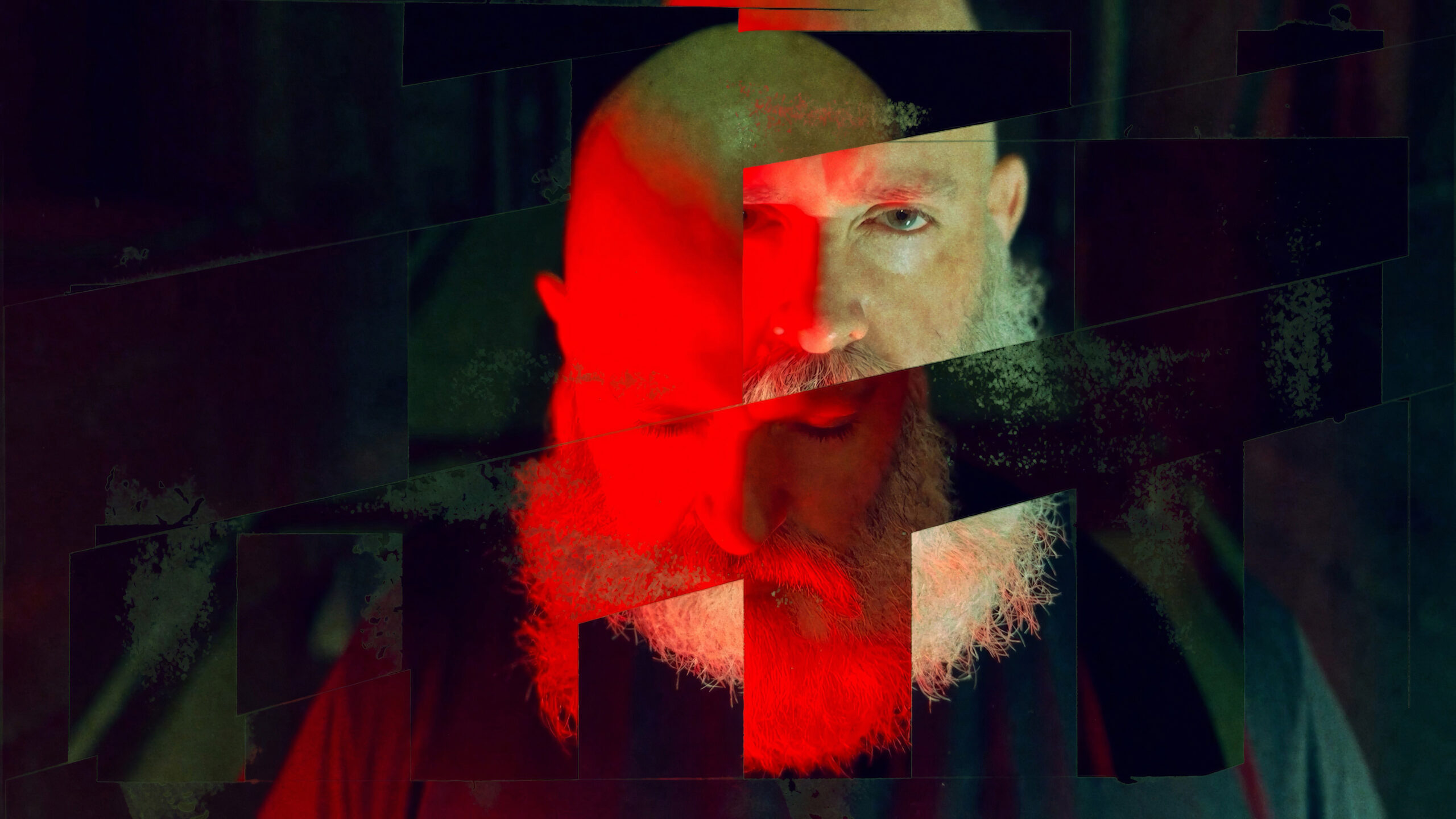
TATV GRAL is an industrial/electronic music project that combines music, photography, film, and visual art to explore the inner life. My work draws from mythology, psychology, and symbolic imagination, using personal experience as the starting point for something larger. Rather than simply telling my story, I try to transform lived experience into images and sound that invite listeners to discover their own meanings. I’ve never really separated painting, music, photography, or film – they’ve always felt like different languages for exploring the same symbolic questions.
When did you first launch the project and how has it come along since?
TATV GRAL has evolved over many years. I’ve always been drawn to the early, brutalist rawness of industrial music – its physicality, experimentation, and uncompromising spirit – but I’m equally interested in music with a strong sense of form that can carry emotional and symbolic weight without sacrificing that raw energy. Alongside that, the project has evolved with my interests in mythology, psychology, and visual storytelling. Each release has expanded that vision, but the new single and remix EP Treachery feels like the beginning of a new chapter. Collaborating with producer William Faith and artists I deeply respect has challenged me to bring the music to a new level while remaining true to the project’s core identity.
What bands and artists influenced you the most and why?
My influences have always reflected different aspects of what I was searching for. Front 242 and Nitzer Ebb showed me how repetition could become hypnotic rather than monotonous. Through subtle shifts in rhythm, texture, and intensity, they created music that felt alive, constantly unfolding, and surprisingly powerful. Skinny Puppy felt almost shamanic to me, as though the music was reaching toward unknown states of experience rather than simply expressing emotion. Coil fascinated me because they united the queer with the sublime. Their music wasn’t simply provocative; it challenged habitual consciousness and suggested that music could awaken perception. They created a world where the psychological, the spiritual, and the erotic weren’t separate domains but different expressions of the same mystery. That vision continues to shape my own work. Later, Haujobb showed me how industrial music could continue evolving while remaining emotionally and sonically adventurous. Outside of music, mythology, psychology, film, and visual art have been just as influential. I’m interested in symbolic thinking and in how personal experience can be transformed into something archetypal. Those influences shape TATV GRAL as much as any record I’ve ever listened to.
If you could pick a single song from your discography to explain your music, which song would you pick and why?
I’d choose ‘Treachery’, because while it doesn’t define the whole project, it occupies a pivotal place within a much larger arc of songs. It represents the crisis point of that journey – the confrontation with the darkest regions of the soul and the powerful forces that can both wound and transform us. The songs before it led toward that encounter, while the songs that follow seek integration and, ultimately, healing. My work is deeply autobiographical, but autobiography is only the beginning. I’m interested in what personal experience becomes when it’s viewed symbolically. Music allows lived experience to resonate as myth, dream, and inner drama. I believe art can contain difficult energies, offering a symbolic vessel where they can be encountered, reflected upon, and transformed rather than merely acted out. My hope is that listeners hear not only my story, but recognize something of their own.
What is your most recent release and what is it about?
My latest release is ‘Treachery’. It occupies the emotional center of a larger body of work and explores what it means to confront the darker forces within ourselves. It’s less about providing answers than entering a difficult psychological landscape and trusting that something transformative can emerge from moving through it. The project took on a life of its own when William Faith came on board as producer. He had me come into the studio to re-record all of the chorus vocals because I had copied and pasted the same performance throughout the song. William told me he values performance, so every chorus became its own unique take. It was a simple lesson, but one that brought a greater sense of life and authenticity to the recording. He then produced, mixed, and mastered an entirely new version of Treachery. What had once been a sonically crowded recording gained space, dimension, and subtlety. William has an extraordinary ability to hear the sonic potential within a song and bring it forward without losing its emotional core. That version became the foundation for the project. From there, the production stems were sent to Daniel Myer, Tweaker, and [melter], each of whom created a remix from the same source material. Rather than asking them to reinvent the song, I invited each artist to uncover something within it that I hadn’t expressed myself. Looking back, I realized each version revealed a different emotional perspective on the same journey.
Take us through your creative process. How do you compose a song from start to finish? Where do the ideas come from?
Most songs begin with an image, an emotion, or a symbolic question rather than a melody. Sometimes I’ll begin in a fairly straightforward, workmanlike way, simply following the craft until intuition breaks through and the song begins telling me what it wants to become. Other times, inspiration arrives unexpectedly from the unconscious, especially during the hypnagogic state between waking and dreaming, when images and ideas seem to emerge with a life of their own. Once I recognize the emotional center of a piece, the lyrics, music, photography, and video concepts begin to develop together. I don’t really separate those disciplines. An image might suggest a song, while a piece of music may completely reshape the visual direction. I’m interested in creating complete artistic experiences where sound, image, and symbolism deepen one another.
What’s your current favorite song, band, or album within your scene? And what do you enjoy the most that’s completely opposite of what you make?
I’m not very good at picking favorites because I find myself continually returning to the records that first shaped me. If I had to mention a few, Ministry’s Twitch has remained a constant favorite over the years, as has Coil’s Horse Rotorvator. Those albums still feel alive to me, and I continue to hear new things in them. Outside of industrial music, I spend a great deal of time studying mythology, depth psychology, and Western esotericism. I’m currently participating in a reading course on Heinrich Cornelius Agrippa’s Three Books of Occult Philosophy with translator Eric Purdue, and I’m also pursuing a graduate certificate in Applied Mythology through Pacifica Graduate Institute. Beyond that, I simply enjoy making things well. Whether it’s music, photography, film, or learning a new craft, I’m drawn to the satisfaction of developing skill over time. I also have a background in massage therapy, so part of my life is devoted to healing and caring for others. In many ways, that impulse toward care is tied to artistic expression – it reflects the same desire to create experiences that help people engage difficult emotions in meaningful ways.
What is on the horizon for your project? Upcoming gigs, tours, merch, videos, etc. Name it, link it, show it off.
Right now, my focus is on continuing to develop the world surrounding Treachery. The music video has just been released, and I’d like to continue that larger arc through additional videos connected to the songs that make up this journey. I’m also writing new material while continuing to explore how music, photography, and film can function together as a unified artistic statement. At this stage in my life, I’m less interested in rockstar fantasies than in making the strongest work I’m capable of. This project began with the ambitions of a teenager, but it took the perspective and discipline of maturity to find its authentic voice. In many ways, everything I’m doing now feels like honoring that younger self, by finally giving them the craft and depth they deserved. One of the greatest joys of this chapter has been collaborating with artists I admired long before we ever worked together, and I hope those collaborations continue. It’s also been a lifelong dream of mine to perform in Germany, the birthplace of so much of the music that first inspired me. More than anything, I hope this journey allows me to discover something genuinely new, perhaps even a new perspective within industrial music, through its symbolic, psychological, and imaginal possibilities.